Explainer
PFAS-Free, PFOA-Free, Ceramic: What Air Fryer Coating Labels Actually Mean
PFOA-free and PFAS-free are legally different claims, and ceramic coatings vary widely. A plain-English decoder for air fryer label chemistry, with examples from current models.
Updated November 6, 2026 · Based on 12 sources · How we research
If you have shopped for an air fryer in the last year, you have seen four labels that look nearly identical on the product page: PFOA-free, PTFE-free, PFAS-free, and ceramic coating. They describe four different things, and only two of them tell you much about what actually touches your food. This guide decodes what each label legally means, where the marketing loopholes are, and how to verify a non-toxic claim before you spend. The one thing most people get wrong: assuming PFOA-free and PFAS-free mean the same thing. They do not, and that gap is the entire reason the labels exist in their current form.
Is PFOA-free the same as PFAS-free? No, and the gap is the whole point
PFAS is the umbrella category. It stands for per- and polyfluoroalkyl substances, a family of thousands of synthetic chemicals defined by strong carbon-fluorine bonds, which is why they are called forever chemicals. PFOA, perfluorooctanoic acid, is one specific molecule inside that family. Companies in the United States phased PFOA out of production by 2015 under the EPA's PFOA Stewardship Program (Our Place).
A PFOA-free label therefore means one specific chemical was not used in manufacturing. It says nothing about the other thousands of PFAS that could be present. The Ecology Center's Healthy Stuff Lab testing of nonstick cookware found that most pans labeled PFOA-free were still coated with PTFE, which is itself a PFAS (Ecology Center). The label is accurate and misleading at the same time.
You can see this play out in current air fryer specs. The Dreo Aircrisp Pro Max lists its basket as nonstick coated and PFOA-free, with no PFAS-free claim. That is a legally defensible way to flag the one chemical consumers recognize while leaving the rest of the coating chemistry undisclosed. A PFAS-free claim, by contrast, is a positive statement that the coating contains no fluorinated compounds at all, which is why it usually comes with ceramic, glass, or bare stainless steel surfaces.
What is PTFE, and is it dangerous in an air fryer?
PTFE is polytetrafluoroethylene, the fluoropolymer behind Teflon and the standard release layer on most nonstick cookware since the 1960s. The FDA has authorized specific PFAS, including PTFE, for cookware use for decades, on the view that the polymer binds tightly to the pan at high manufacturing temperatures and does not migrate under normal cooking (FDA).
Normal is the hinge word. PTFE is stable below about 500 degrees F, or 260 degrees C. Above that it begins to decompose and can release fluorinated gases linked to polymer fume fever in humans and acute toxicity in pet birds (Fritaire). An NCBI-indexed study on PTFE-coated aluminum cookware recommends keeping cooking surfaces below 250 degrees C to limit mechanical and chemical degradation (NCBI).
Air fryers publish maximum temperatures of 400 to 450 degrees F, which sits under the threshold on paper. The practical risk is empty preheating with a PTFE basket, since the surface directly under the element can run considerably hotter than the chamber setpoint and approach the decomposition range. The Ninja Foodi DZ201 is one of the few baskets in our ranking that explicitly names PTFE in the spec sheet, which is unusual transparency; most PTFE air fryers are listed as nonstick coated with no polymer named.
Are ceramic air fryers really non-toxic, or is ceramic a loophole?
Ceramic nonstick is not a single material. It is a category, and the FDA does not regulate the word ceramic on cookware labels. The underlying chemistry in most consumer ceramic baskets is a sol-gel coating: a silica sol combined with methyltrimethoxysilane and often polydimethylsiloxane, cured into a thin silicon dioxide matrix on the aluminum basket. The Si-CH3 groups on the outer surface give the oil-like release layer that keeps food from sticking (ScienceDirect, Fluorocarbon).
Sol-gel coatings are genuinely fluorine-free when made correctly, which is why reputable PFAS-free ceramics such as those on the Cosori Iconic, the Cosori TurboBlaze, and the Typhur Sync AF14 can hold up to scrutiny. Typhur publishes a third-party PFAS test report from TÜV Rheinland on its Dome 2 product pages; for the Sync, the brand states the basket is PFAS-free and fluorine-free on the product page, which is a written claim rather than an uploaded lab certificate.
The weak side of ceramic is durability. The PFAS-Free Kitchen guide notes that ceramic nonstick typically lasts 1 to 3 years of regular use before release performance degrades, shorter than PTFE under the same conditions (PFAS-Free Kitchen). Ceramic is harder but more brittle, so it tends to flake in sheets rather than wear smoothly. A ceramic basket is safer than a PTFE one chemically; it is not more forgiving of abuse.
Is Teflon-free the same as PFAS-free?
Teflon is a brand name. It is owned by Chemours, which spun out of DuPont in 2015. A Teflon-free label strictly means the manufacturer did not buy coating from Chemours. It does not rule out PTFE from any of the dozens of other fluoropolymer suppliers, and PTFE from a Korean or Chinese coater is chemically the same molecule and the same PFAS as PTFE from Chemours (Our Place).
Treat Teflon-free the same way you treat PFOA-free: as marketing that answers a different question than the one you are asking. The only label that makes a positive statement about the whole class is PFAS-free, and even then it is stronger when paired with the specific coating material and ideally a third-party test report. Mamavation's ongoing air fryer survey, which contacts manufacturers about coating chemistry across roughly 80 models, has found that brands leaning on PFOA-free or Teflon-free labels routinely decline to confirm PFAS-free status for the coating itself when asked directly (Mamavation).
What does non-toxic actually mean on an air fryer box?
Non-toxic is unregulated marketing language. There is no FDA definition for the phrase on cookware or small appliances, and no third-party certification standard that must be met before a brand can print it. In practice, serious brands use non-toxic to signal one of three things: a PFAS-free ceramic basket, an uncoated stainless steel interior, or a glass cooking vessel. Weak brands use it to signal that the plastic exterior is BPA-free, which has nothing to do with what your food touches.
If a listing says non-toxic but the basket material line says nonstick coated with no polymer specified, assume PTFE and assume the exterior is what the word non-toxic was describing. The strong versions of the claim name the surface explicitly. The Cuisinart TOA-FD70 uses a PFAS-free stainless steel interior with no nonstick layer at all, which is chemically the simplest claim to verify. The Ninja Crispi DD101 uses tempered glass containers that Ninja markets as PFAS-free, with no nonstick coating on the food-contact surface.
Is stainless steel safer than ceramic coating?
From a pure chemistry standpoint, yes. Food-grade stainless steel has no coating, so there is nothing to degrade, scratch through, or migrate into food at any air fryer temperature. Ceramic sol-gel coatings are inert when intact and the formulation is clean, but they are still a layer applied to aluminum, and that layer wears. The PFAS-Free Kitchen guide frames glass as the chemical gold standard and stainless as the most practical option, with coating-based systems ranked below both (PFAS-Free Kitchen).
The practical trade is release and cleanup. Food sticks to bare steel. The Dreo ChefMaker ships with a stainless basket and compensates with a moisture-retention water atomizer and precision probe programs that limit crust bonding. The Cuisinart Artisan TOA-FD70 uses a stainless interior inside a toaster-oven-style cavity, so racks and trays take the abuse rather than a drawer. Owners of bare-stainless units commonly use parchment liners for sticky food, which is a small cleanup cost in exchange for a coating-free surface.
For families that want nonstick behavior without PTFE, PFAS-free ceramic baskets like the one on the Cosori Iconic sit between the two camps, with the understanding that the coating will degrade faster than stainless will. The Iconic pairs its ceramic basket with a 5-year limited warranty, which is unusually long for the category (Bob Vila).
Can nonstick coating peel into my food, and does it matter?
Peeling is the single most common complaint in the category. A review-mining analysis of 97,574 air fryer owner reviews found that 36 percent of negative reviews mentioned nonstick coating peeling, making it the top pain point across all brands (Homekitchen Searches). It happens to PTFE baskets from metal utensil contact and thermal shock, and it happens to ceramic baskets from their inherent brittleness.
The health answer is nuanced. Intact PTFE flakes are chemically inert and poison-control authorities do not treat a single ingested flake as a toxic exposure; the particles are too large for the digestive system to absorb and pass through. The harder question is cumulative micro- and nanoparticle release from damaged coatings. A Flinders University and University of Newcastle Australia study, published in Science of The Total Environment, estimated that a single surface scratch on a Teflon-coated pan can release around 9,100 microplastic particles during 30 seconds of simulated cooking, and that a broken coating can release roughly 2.3 million micro- and nanoplastic particles in the same window (Flinders News). The long-term health effects of ingesting that volume of fluoropolymer particles are not yet established in the peer-reviewed literature.
The practical rule is simple: once you can see peeling, chipping, or bare metal through the coating, replace the basket. Do not try to season or repair it. For PTFE baskets, that typically arrives at 1 to 3 years with daily use. For ceramic, it can arrive sooner if the basket has been through the dishwasher repeatedly or taken a drop.
How do I know if my air fryer has PFAS?
The spec sheet language tells you most of what you need, if you read it precisely. These are the signals, ranked from strongest claim to weakest:
Independent reporting of the category confirms this hierarchy. The Ecology Center's lab testing of nonstick cookware repeatedly identified PTFE under PFOA-free labels, and Mamavation's manufacturer survey has flagged air fryer brands that advertise PFOA-free or Teflon-free while declining to confirm PFAS-free status for the coating itself (Ecology Center, Mamavation).
- Glass or bare stainless steel basket, no coating listed, strongest. Verify by checking the basket material field and confirming no release layer is mentioned.
- PFAS-free ceramic, with a published third-party test report, strong when the brand will show you the report. Typhur publishes one for its Dome 2. Some Cosori ceramic SKUs provide documentation.
- PFAS-free ceramic, no test report, reasonable, but you are trusting the brand. Check whether the exact SKU, not the lineup, carries the claim.
- PFOA-free or Teflon-free with no PFAS-free claim, treat as PTFE. The absence of the PFAS-free line is deliberate.
- Nonstick coated with no polymer named, assume PTFE. This is the default for most sub-$120 air fryers.
The short version
If zero PFAS exposure is your hard line, buy an uncoated stainless steel or glass basket. The Cuisinart TOA-FD70, the Dreo ChefMaker, and the Ninja Crispi DD101 are the cleanest claims in our current ranking. If you want nonstick release without PTFE, buy a PFAS-free ceramic basket from a brand willing to publish a test report, which in practice means the Cosori Iconic, the Typhur Sync AF14, or the Cosori TurboBlaze. If a listing says only PFOA-free or Teflon-free, read it as a PTFE basket that the brand would rather not describe directly, and decide whether you are comfortable with that chemistry at air fryer temperatures. For the full set of models and how they score against each other, see our Best Air Fryers of 2026.
See Best Air Fryers of 2026Questions people ask
Is PFOA-free the same as PFAS-free?+
No. PFOA is one specific chemical inside the PFAS family of thousands of per- and polyfluoroalkyl substances. A PFOA-free pan can still be coated in PTFE, which is itself a PFAS. The Ecology Center found that most PFOA-free nonstick cookware it tested was PTFE-based. If you want to avoid the whole class, look for a PFAS-free claim paired with ceramic, glass, or bare stainless steel surfaces.
Are ceramic air fryers really non-toxic?+
Legitimate sol-gel ceramic coatings are silica-based and genuinely fluorine-free, which is what makes them a real PTFE alternative. The catch is that ceramic is an unregulated term on labels, formulations vary, and the coating wears faster than PTFE, typically lasting 1 to 3 years. Typhur and some Cosori ceramic models publish PFAS-free documentation. Generic brands often cannot.
What is PTFE and is it dangerous in an air fryer?+
PTFE, polytetrafluoroethylene, is the fluoropolymer behind Teflon. It is inert and FDA-authorized for cookware below about 500 degrees F. Air fryers spec 400 to 450 degrees F, but surfaces directly under the heating element can run hotter than the display setpoint during empty preheating, which is where PTFE begins releasing fluorinated fumes. Do not run an air fryer empty, and replace any PTFE basket that is scratched or peeling.
Is Teflon-free the same as PFAS-free?+
No. Teflon is a brand name owned by Chemours. Teflon-free only means the coating did not come from Chemours. A different supplier's PTFE is the same molecule and the same PFAS. The only label that makes a positive statement about the whole class is PFAS-free, and it is strongest when paired with a specific coating type and an independent test report.
What does non-toxic mean on an air fryer?+
Nothing legally. The FDA does not define non-toxic on cookware, and there is no required certification. Serious brands use the phrase to flag a PFAS-free ceramic, stainless steel, or glass food-contact surface. Weak brands use it to flag BPA-free plastic on the exterior. Read the basket material line, not the marketing tagline.
Is stainless steel safer than ceramic coating?+
Chemically, yes. Bare stainless steel has no coating to degrade, scratch, or migrate, at any temperature an air fryer will reach. Ceramic sol-gel coatings are inert when intact but will wear, chip, and eventually expose aluminum underneath. The trade-off is that food sticks more readily to steel, so stainless baskets often require oil spray or parchment for cleanup.
Can nonstick coating peel into my food?+
Yes, and it is the most common complaint in the category. Intact PTFE flakes are inert and pass through the digestive system, but a Flinders and Newcastle Australia study estimated that a single scratch can release about 9,100 microplastic particles in 30 seconds of cooking, and a broken coating can release roughly 2.3 million micro- and nanoplastic particles. Long-term health effects are unresolved. Replace any basket with visible peeling rather than continuing to use it.
How do I know if my air fryer has PFAS?+
Read the basket material line on the product page, not the headline. Glass or bare stainless means no PFAS in food contact. PFAS-free ceramic with a published test report is strong. PFOA-free or Teflon-free with no PFAS-free statement should be read as PTFE. Nonstick coated with no polymer named should also be read as PTFE. The Ecology Center's lab testing of nonstick cookware has repeatedly identified PTFE under PFOA-free labels, so the label alone is not enough.
Sources
What this guide is based on. We research from published specifications, independent reviews and owner reports; we did not test these products ourselves.
- 1.PFAS vs PFOA vs PTFE, Our Place
- 2.What's Cooking? Undisclosed PFAS Coatings Common on Cookware, Ecology Center
- 3.Authorized Uses of PFAS in Food Contact Applications, U.S. Food and Drug Administration
- 4.Influence of heating temperature and time on mechanical degradation of Teflon-coated aluminum alloys used for non-stick cookware, NCBI / National Library of Medicine
- 5.Towards a greener kitchen: Can sol-gel ceramic non-stick coatings replace polytetrafluoroethylene?, ScienceDirect
- 6.What is Sol-Gel Coating? PFAS Free Advanced Surface Coatings, Fluorocarbon Group
- 7.Best Non-Toxic Air Fryers: Top Picks Sans Toxic PFAS, Mamavation
- 8.Not-so-tough Teflon, Flinders University News
- 9.Are Air Fryers Safe? PFAS, Heat, and What the Research Actually Says, Fritaire
- 10.Tested: Cosori Built a Stainless Steel Air Fryer to Reduce Plastics, Bob Vila
- 11.Non-Stick Coating Peeling in Air Fryer: What 97,574 Reviews Reveal, Home Kitchen Searches
- 12.PFAS-Free Air Fryer Guide: Stainless Steel, Ceramic & Glass Options, PFAS-Free Kitchen
Products mentioned
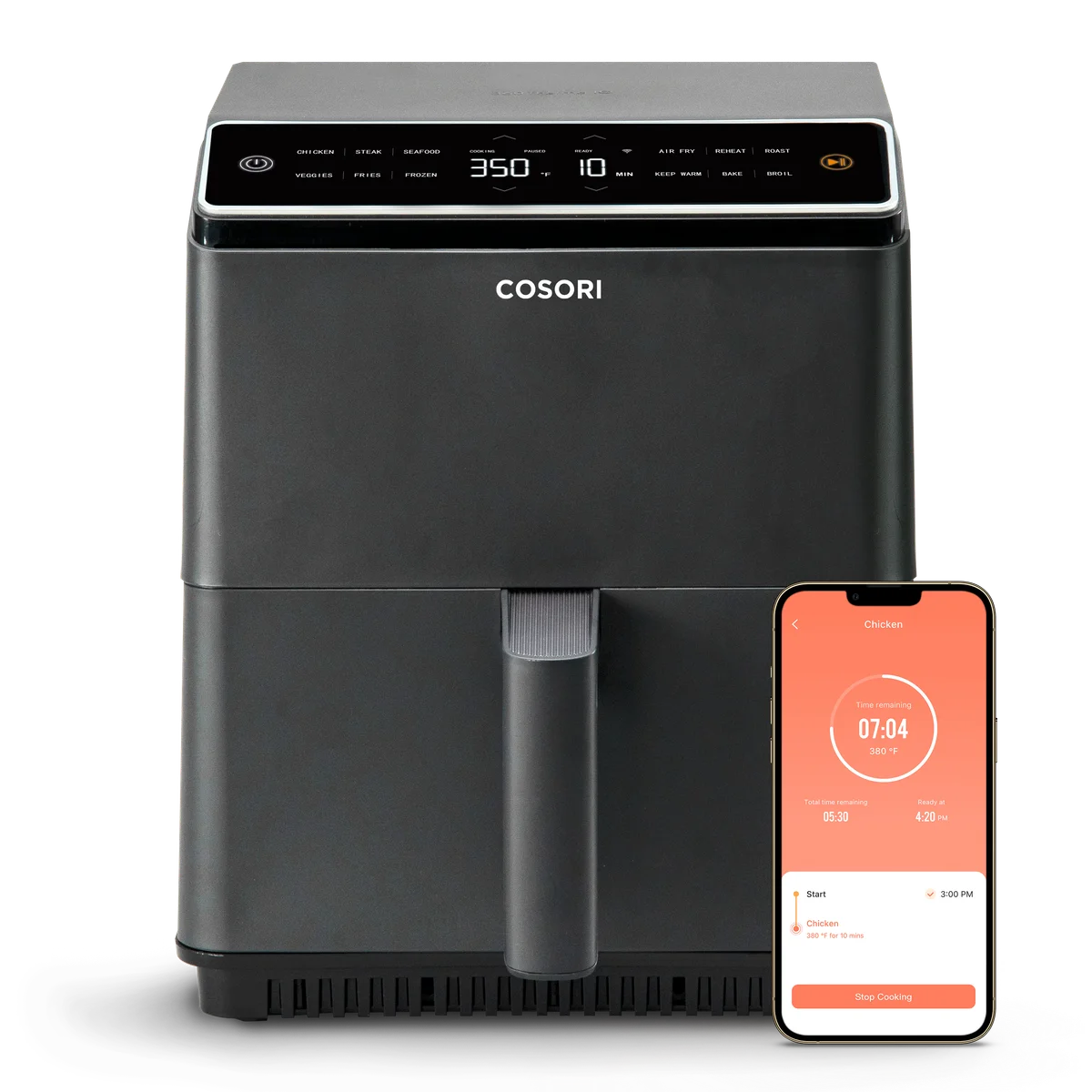 Cosori Dual Blaze 6.8-Quart Smart Air Fryer
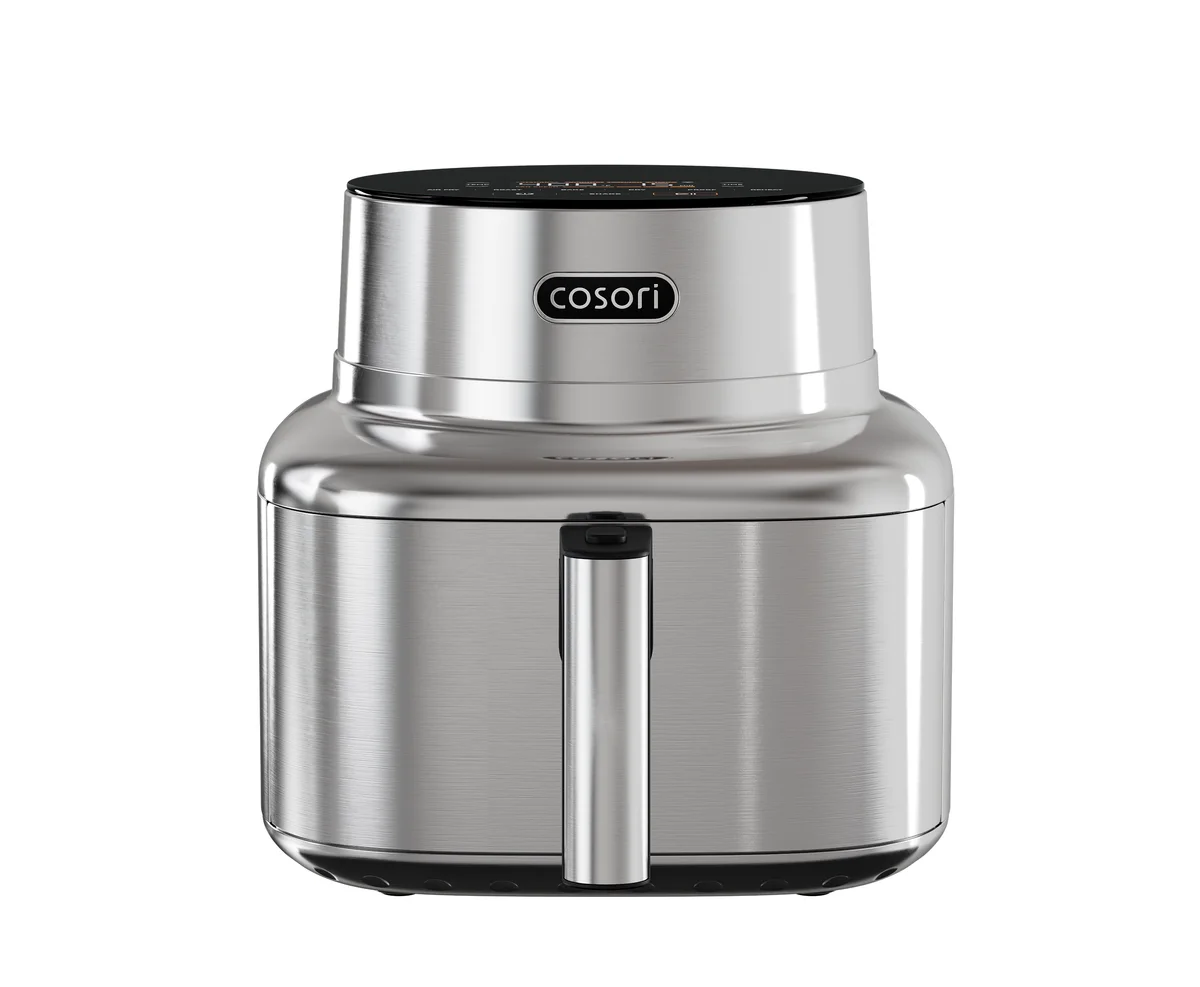 Cosori Iconic Stainless Steel 6.5-Quart Smart Air Fryer
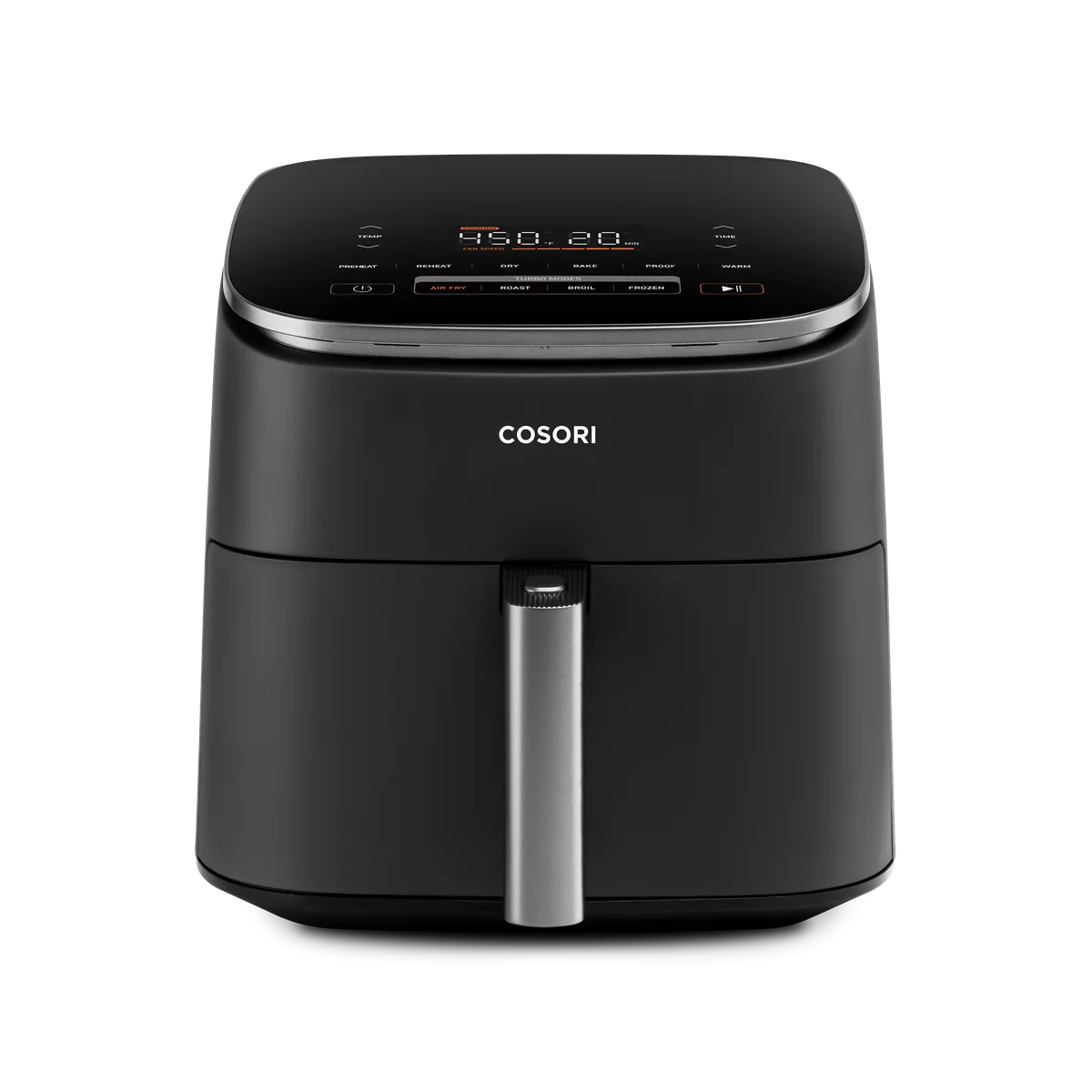 Cosori TurboBlaze 6.0-Quart Air Fryer
 Cuisinart Artisan French Door Air Fryer Toaster Oven TOA-FD70
 Dreo Aircrisp Pro Max 6.8-Quart Air Fryer DR-KAF001
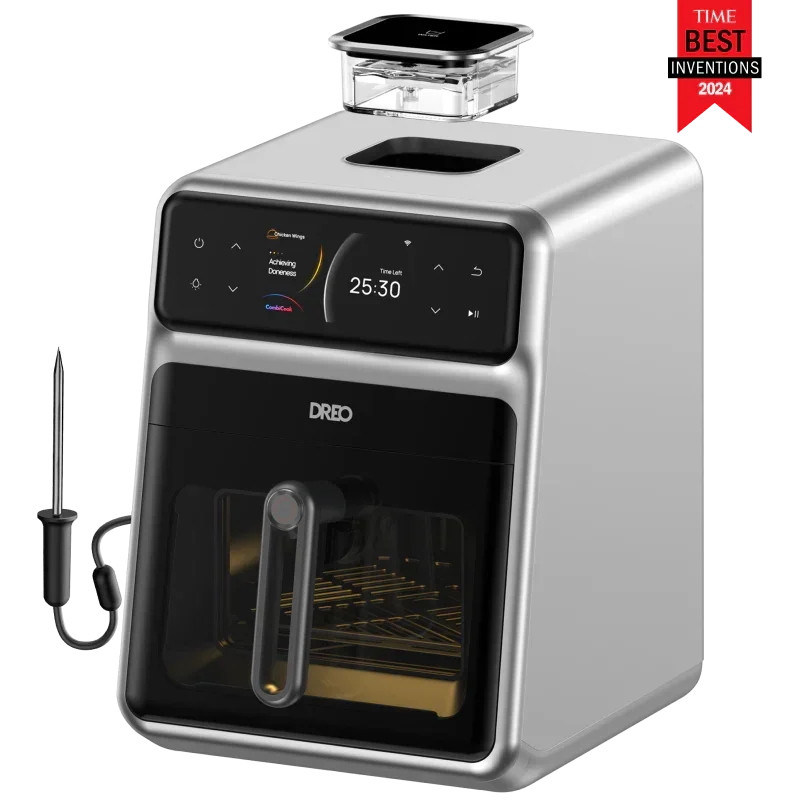 Dreo ChefMaker Combi Fryer
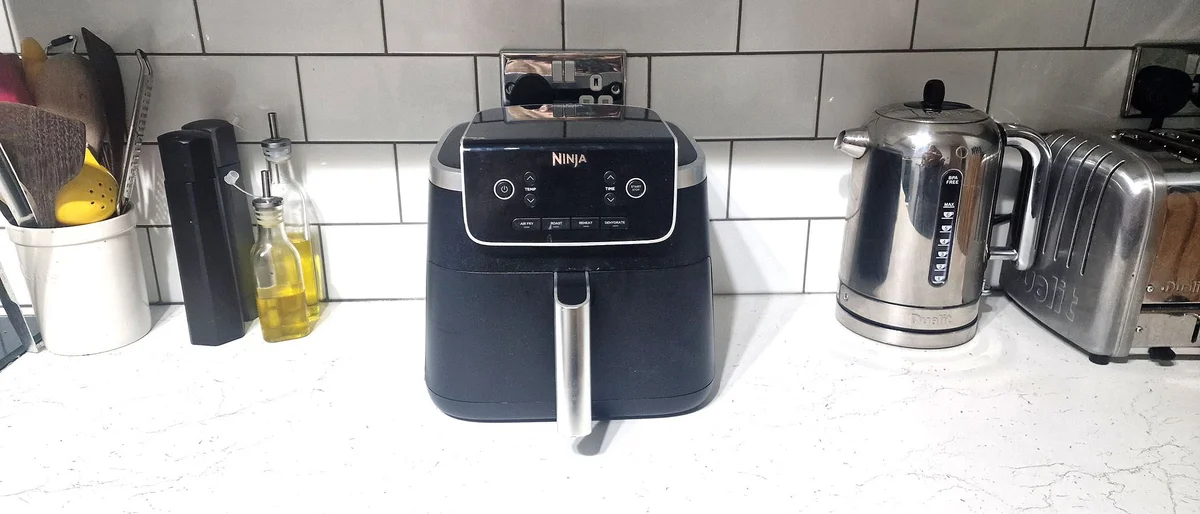 Ninja Air Fryer Pro 4-in-1 AF141
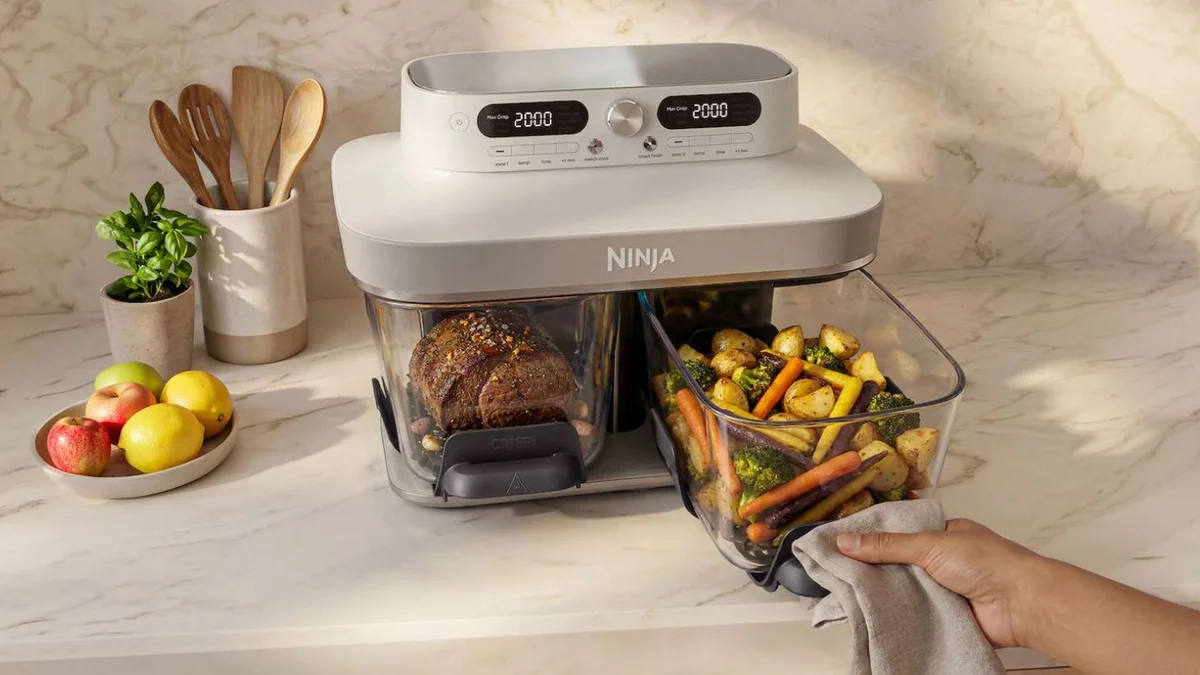 Ninja Crispi DualZone Glass Air Fryer DD101Ninja Foodi 6-in-1 8-Quart DualZone Air Fryer DZ201
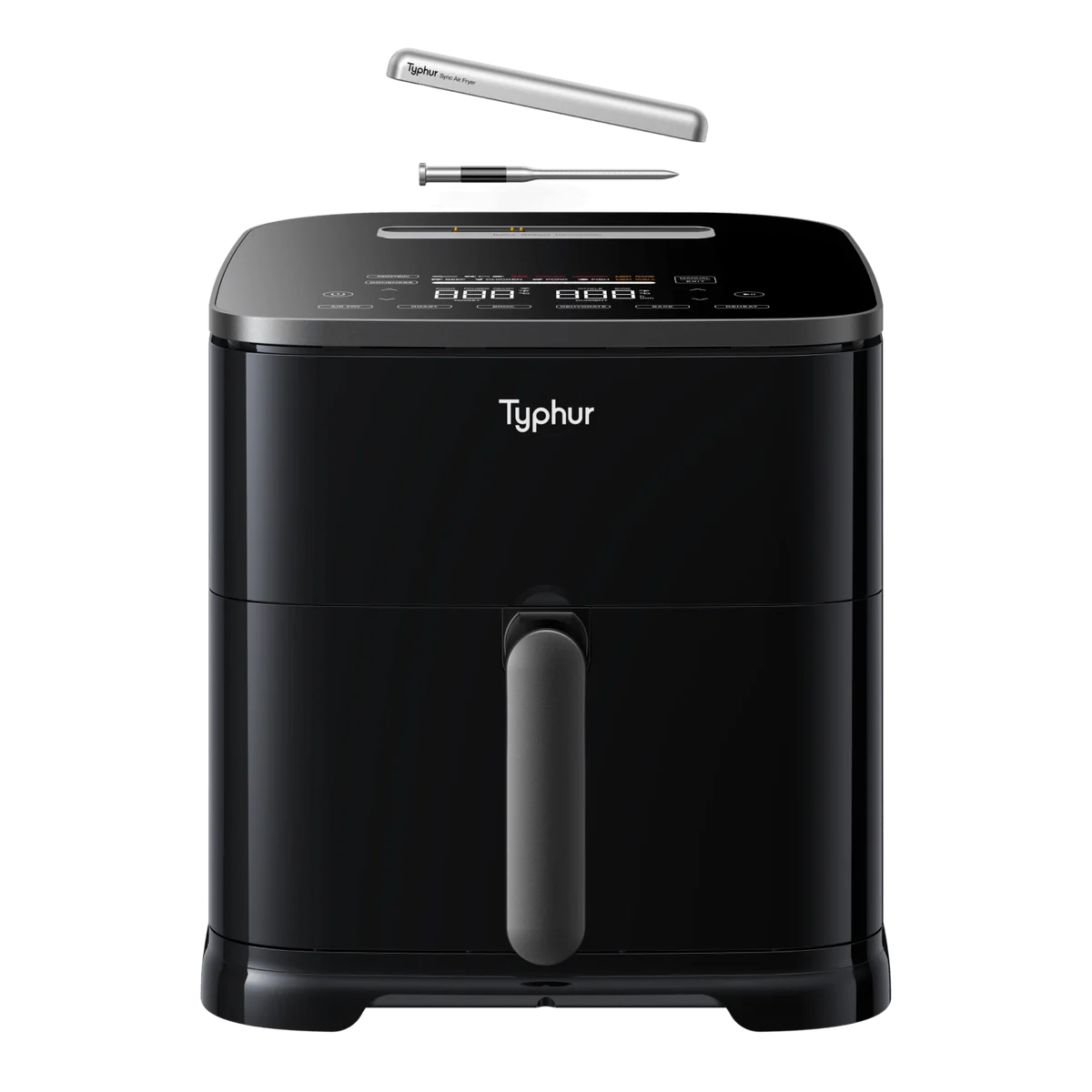 Typhur Sync Air Fryer AF14
More on air fryers
Explainer
Air Fryer vs. Convection Oven: Same Technology, Different Results
An air fryer is a small convection oven with a faster fan. Here is when that gap is worth the counter space, and when your oven already does the job.
Buying guide
How to Choose an Air Fryer: The 5 Decisions That Actually Matter
A plain-English buying guide to the five air fryer specs that actually change your experience: capacity, basket layout, format, coating and smart features.