Explainer
Firmness and Support Are Not the Same Thing
Firmness is a surface feeling. Support is what the core does for your spine. Here is why that gap matters, and why a firm mattress can still wreck your back.
Updated November 6, 2026 · Based on 19 sources · How we research
If you bought a firm mattress to fix your back pain and still wake up aching, you ran into the most common confusion in the category. Firmness is a surface sensation: how hard the top of the bed feels when you press it. Support is what the structure underneath does for your spine over seven or eight hours of load. They are set by different layers, measured by different things, and they can diverge. A mattress can feel like plywood and still let your lumbar vertebrae tip into misalignment. Another can feel plush in a showroom and still hold the same spine in a neutral line until morning. This guide is for anyone shopping with back pain in mind, or anyone who already owns a mattress and cannot work out why it is not helping.
Firmness is a feeling. Support is a structural fact.
Firmness is how a mattress feels on the surface and it is driven mostly by the comfort layers: the pillow top, the memory foam, the latex, the quilt. Support is the mattress's ability to hold your spine in its natural S-curve, and it comes from the core: coils, high-density foam, latex base layers, or air chambers. Sleep Foundation, City Mattress, and Bear Mattress all put it the same way in different words: these are independent variables. A bed can be soft and supportive, or firm and unsupportive, or any combination of the two.
Firmness is usually rated on a 1-to-10 scale where 1 is extra soft and 10 is extra firm; most mattresses sold today sit in the 5-to-7 band that gets called medium to medium-firm, according to Sleep Foundation's scale. Support does not have a scale. It is a property you can only see at night, by looking at whether a person's lumbar curve stays neutral when they lie down. That is why the two get conflated: firmness has a number on the label, support does not.
Does a firmer mattress mean better back support?
No. The most-cited clinical evidence here is a trial by Francisco Kovacs and colleagues published in The Lancet in November 2003. Three hundred and thirteen adults with chronic non-specific low-back pain were given either a firm mattress (rated 2.3 on a European scale, near the hard end) or a medium-firm one (rated 5.6). After 90 days the medium-firm group was about twice as likely to report improvement in daytime pain, pain in bed, and pain-related disability, as summarized by EurekAlert and Clinician.com.
Spine-Health and Sleep Foundation both cite the Kovacs trial as the strongest clinical evidence we have, and no larger study has overturned it. The folk belief that firmer is better for your back predates that trial and has survived it mostly out of habit.
Why your firm mattress still gives you back pain
When a mattress is too firm, your shoulders and hips cannot sink enough for the rest of your spine to follow its natural curve. On your back this leaves a hollow under the lumbar vertebrae and the muscles there compensate all night for the mattress not doing its job. On your side the shoulder and hip meet an unyielding surface and the waist arcs above an empty gap. Sleep Foundation and Beloit Mattress both describe this pattern, pain that is worst on waking and eases within an hour of standing up, as the signature of a mattress that lets the spine sit out of alignment overnight.
The second reason is more subtle: a firm comfort layer sitting on a worn support core. If the foam on top still feels firm but the core beneath has started to break down, from sagging, broken coils, or a compressed foundation, your pelvis will still drop at the center of the bed even though the first inch feels hard. The Mattress Advisor and Sweetnight both note that comfort layers and support cores fail on different schedules, which is why a bed that looks fine from the top can let your spine fold in the middle.
Can a soft mattress be good for your back?
Yes, if the structure underneath keeps your spine neutral while the surface gives at the pressure points. Two mechanisms do this well.
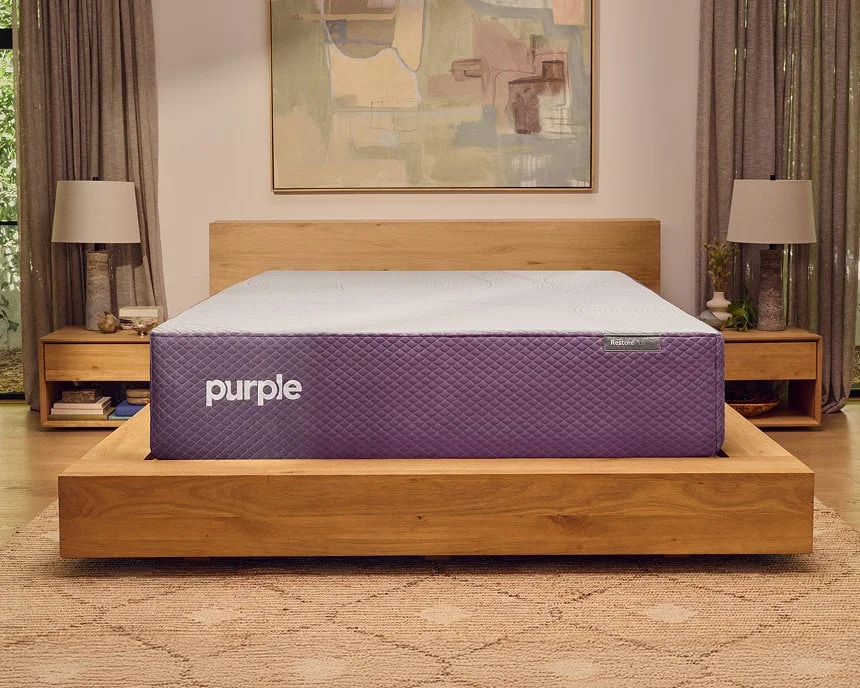
A direct example is the Purple RestorePlus Hybrid, rated 4 out of 10 on firmness, a medium-soft feel. Purple's GelFlex Grid in the comfort layer collapses under concentrated loads like hips and shoulders and stays rigid under the broader, flatter midsection. Combined with zoned pocketed coils, Sleepopolis and Sleep Advisor both describe the Grid as a case where soft feel and spinal support come from the same layer rather than from opposed layers.
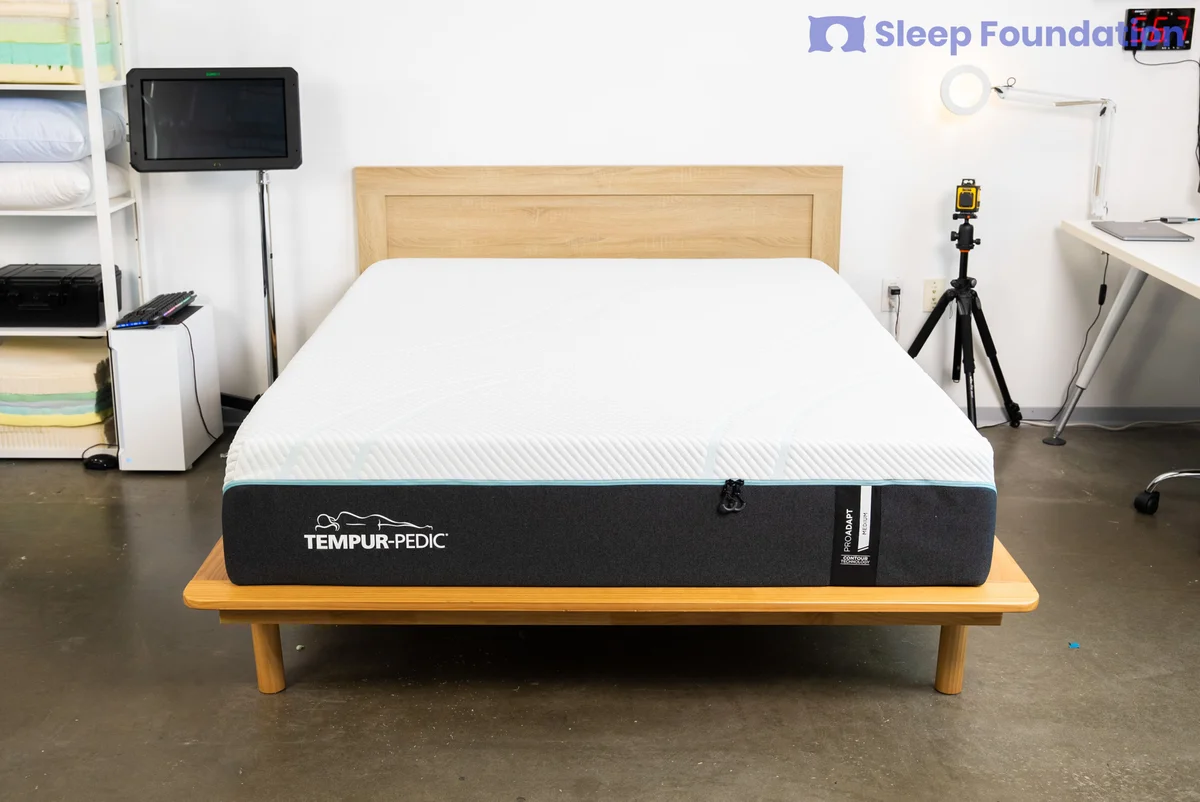
Memory foam gets to a similar place by conforming instead of selectively collapsing. The Tempur-Pedic TEMPUR-ProAdapt Medium rates about 5 on firmness, but its slow-responding viscoelastic layer fills the space under the lumbar curve rather than pressing it flat.
What zoned support actually does
Zoned support is the direct engineering answer to the firm-but-not-supportive problem. The idea is to put firmer coils or denser foam directly under the lumbar region, where the heaviest part of most torsos sits, while keeping the shoulder and hip zones softer so pressure points can decompress. The center third of the mattress does the support work; the top and bottom thirds handle pressure relief. National Mattress describes this as shorter or firmer coils in the lumbar zone reaching full engagement sooner.
Three concrete examples from mattresses in our Best Mattresses of 2026 ranking show how different brands execute the same idea. The common point is that the firmness number on the label tells you very little about how the support is delivered; the story is in the construction.
| Model | Firmness feel | How it delivers support | Rank |
|---|---|---|---|
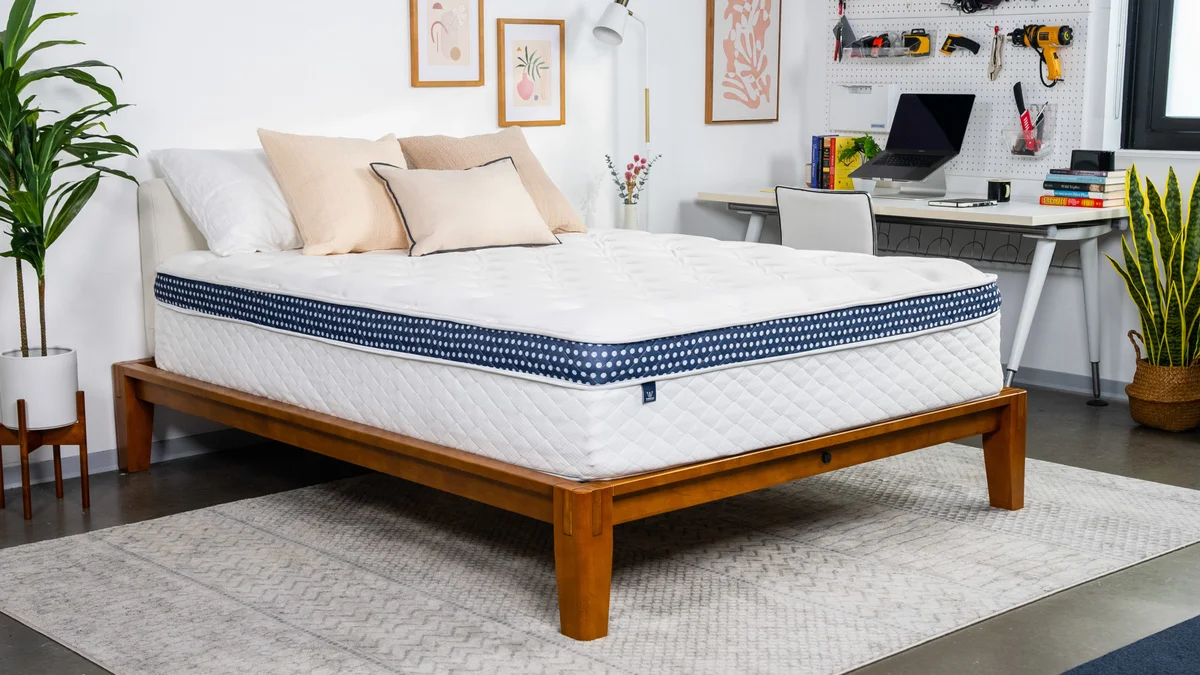
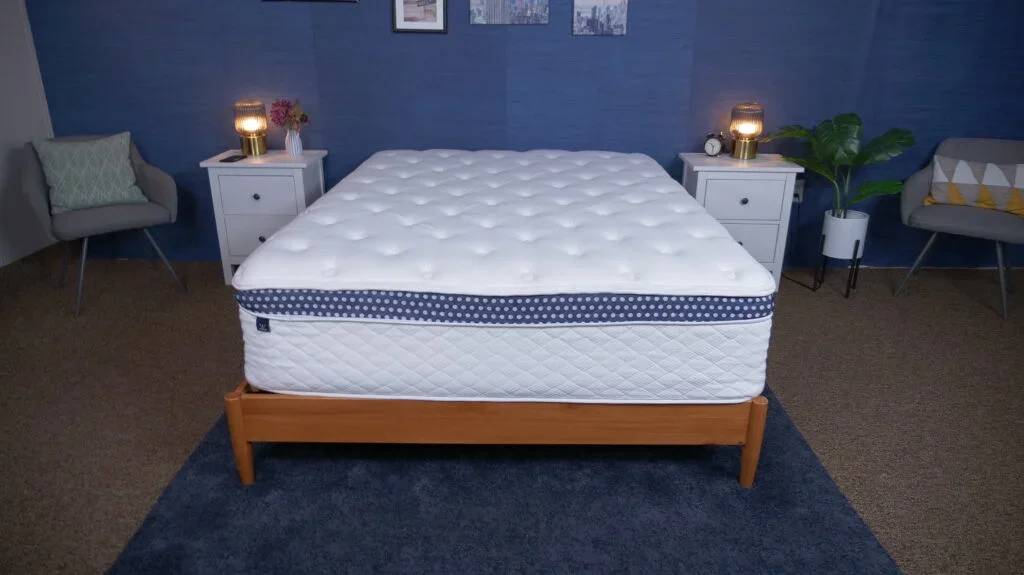
| WinkBed Luxury Firm Hybrid | 5 to 6 of 10 | LumbarLayer zoned foam insert in the center third over triple-tempered pocketed coils | #1 |
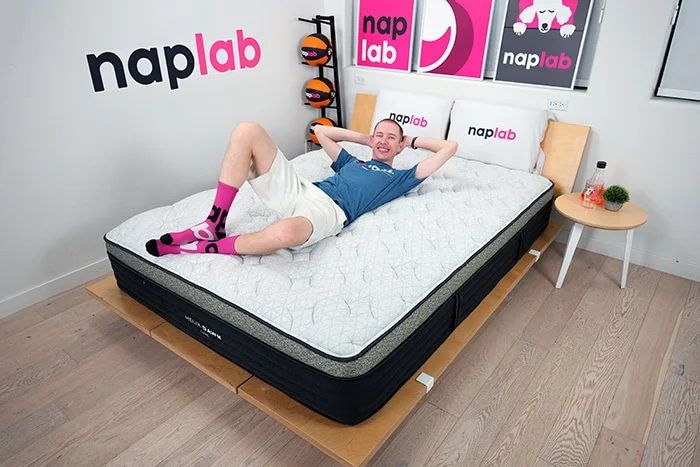
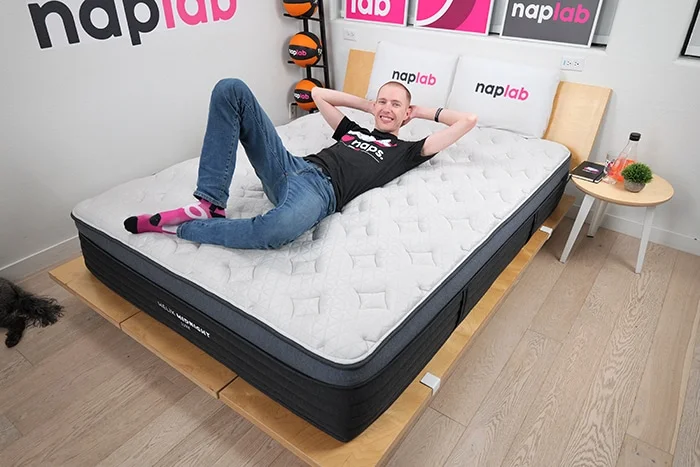
| Helix Midnight Luxe | 6 of 10 | Zoned pocketed coils firmer under lumbar, softer at shoulders (independent pressure-relief score 4.17/5) | #2 |
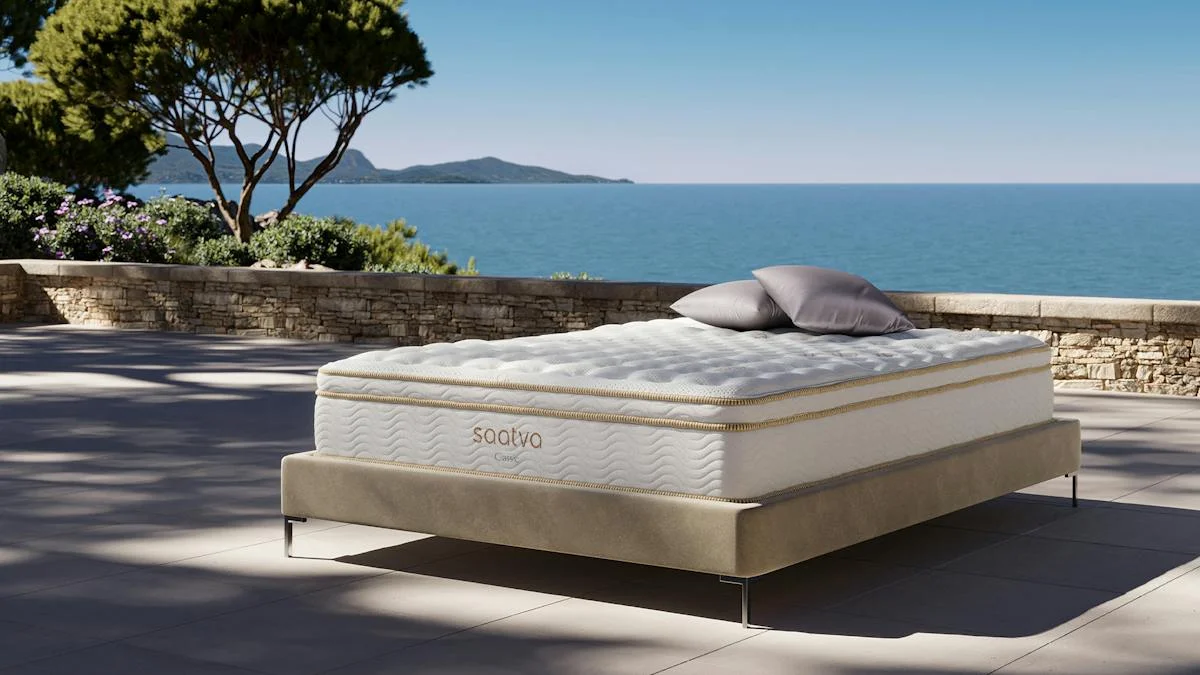
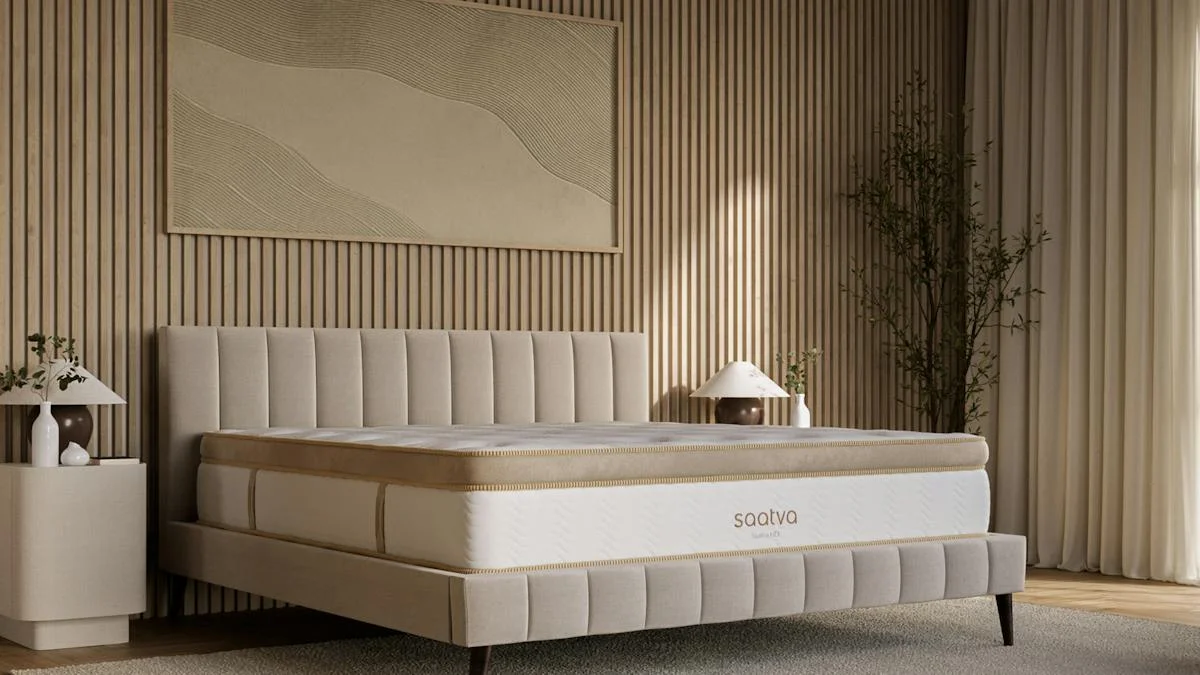
| Saatva Classic | 6 of 10 | Lumbar Zone active-wire plus denser center coils plus memory-foam lumbar crown in the Euro top | #3 |
| WinkBed Luxury Firm | 6.5 of 10 | 3-Step Back-Relief System with Extra-Edge perimeter reinforcement | #4 |
| Purple RestorePlus Hybrid | 4 of 10 (soft) | GelFlex Grid that selectively collapses plus zoned pocketed coils | #16 |
Body weight and sleep position scramble what firm even means
A medium-firm mattress does not feel medium-firm to every body. Mattress Clarity and Sweetnight both make the simple point: a heavier sleeper sinks further into the same comfort layer, so a 6-of-10 mattress sleeps like a 5 under a 230-pound body and like a 6.5 under a 150-pound one. For sleepers over 230 pounds, Sweetnight recommends looking at medium-firm to firm, paired with specifically reinforced construction: the WinkBed Plus is rated to 450 lb per side with zoned coils, and the Saatva HD uses 14-gauge tempered steel coils rated to 500 pounds. A standard medium-firm will feel right to a heavy sleeper on day one and still allow the lumbar to sag.
Sleep position inverts the problem. Side sleepers need their shoulders and hips to sink further to keep the spine neutral; a mattress that is firm all the way through props those joints up and the waist arcs above a hollow. Stomach sleepers face the opposite risk: Sleepopolis and Tom's Guide both describe lumbar hyperextension, the spine over-arching when the hips sink into a soft bed, as the specific failure mode they face. A firm mattress (7 to 9) actively prevents this, which is one of the few scenarios in which firmer really is better.
Diagnosing the mattress you already own
If you already own a bed and are trying to diagnose the pain, three patterns are useful. First, pain on waking that resolves within an hour of standing up almost always means the mattress let the spine sit out of neutral overnight; both Sleep Foundation and Beloit Mattress single out that pattern.
Second, a visible depression in the center of the mattress, more than about 1.5 inches that does not recover when you get off it, is support-core failure rather than a comfort-layer problem. A topper will not fix that; the mattress needs replacing, according to The Mattress Advisor.
Third, pain localized at hips and shoulders, especially in side sleepers, is usually a firmness problem (too firm) rather than a support problem. A softer comfort layer or a plush topper can help in this case, and a zoned mattress like the Helix Midnight Luxe is the clearer upgrade path.
Sleep position and body weight settle the shortlist
If you are shopping now, work in this order. First decide the firmness that your position and weight need as a starting point. Then look for a named support mechanism, not vague copy.
Saatva publishes an endorsement from the American Chiropractic Association for its Lumbar Zone construction, which is a clearer third-party cue than most on-page marketing copy.
- Side sleepers, 130 to 230 lb: medium (5 to 6) with zoned shoulder softness; the Helix Midnight Luxe or a conforming foam like the Tempur-Pedic ProAdapt Medium are the natural fits.
- Back sleepers with lumbar pain: medium-firm (6 to 7) with a named lumbar system; the WinkBed Luxury Firm Hybrid or Saatva Classic are the direct examples in our rankings.
- Stomach sleepers: firm (6.5 to 8) to prevent hip sinkage; the WinkBed Luxury Firm at 6.5 or the Helix Dawn Luxe at 8 are built for this specifically.
- Over 230 lb: medium-firm to firm with reinforced coils rated for your weight; the WinkBed Plus (rated to 450 lb per side) and Saatva HD (500 lb capacity, 14-gauge coils) are the two clear picks.
- Unsure or switching positions all night: medium-firm with multi-zone support and a 365-night trial; the three top-ranked hybrids above all meet that.
- If you already own a mattress with a dip you can see: replace, do not topper.
The short version
Firmness tells you how the mattress will feel in the showroom. It does not tell you how your spine will fare at 3 a.m. For back and stomach sleepers, and for anyone over 230 pounds, the construction that actually matters sits in the core: zoned coils, a dense lumbar insert, or a conforming material like TEMPUR or the Purple GelFlex Grid. Medium-firm is a reasonable default, but medium-firm with named zoned support and medium-firm without it are two different mattresses. Read the specs, not the sticker. For a side-by-side of the ones that deliver both, see our Best Mattresses of 2026.
See Best Mattresses of 2026Questions people ask
Does a firmer mattress mean better back support?+
No. Firmness is how the surface feels; support is what the core does for your spine. The 2003 Kovacs trial in The Lancet found medium-firm mattresses roughly twice as likely to improve chronic low-back pain as firm ones, and no larger study has overturned that finding.
Why does my firm mattress still give me back pain?+
Two common reasons. Either the surface is too firm to let your hips and shoulders sink, which leaves a gap under your lumbar curve, or the support core has worn out beneath a still-firm top layer so your pelvis drops at the center of the bed. Pain that eases within an hour of getting up is the classic sign of either.
What is the difference between firm and supportive?+
Firm describes how the mattress feels when you press on the surface, a property of the comfort layers. Supportive describes whether the mattress keeps your spine in its natural S-curve, a property of the core and any zoned reinforcement. A bed can be one without the other.
Can a soft mattress be good for your back?+
Yes, if the structure underneath keeps your spine neutral. Memory foam fills the lumbar gap by conforming; Purple's GelFlex Grid buckles under hips and shoulders while staying rigid under the midsection; zoned hybrids give the surface a soft feel over a firmer center zone. All three can preserve alignment despite a soft surface.
My mattress feels hard but my back still hurts, why?+
Either the mattress is too firm for your sleep position and body weight (preventing your shoulders and hips from sinking enough to keep the lumbar supported), or the support core has begun to fail under a still-firm comfort layer. Look for a dip in the center that does not recover when you get off: that is structural failure, not a comfort problem.
Is medium-firm the right choice for most people?+
It is the broadly supported starting point, especially for back and combination sleepers in the 130 to 230 lb range. Side sleepers often do better a notch softer; strict stomach sleepers and sleepers over 230 lb usually need a notch firmer and specifically reinforced construction.
Does zoned lumbar support actually work?+
The mechanism is clear: firmer coils or denser foam directly under the heaviest part of your torso. Independent testing by NapLab and Sleep Foundation reports alignment and pressure-relief numbers consistent with that mechanism. Quality varies: look for a named system like WinkBed's LumbarLayer or Saatva's Lumbar Zone, not vague marketing copy.
Can a mattress topper fix a bed with sagging support?+
No. A topper changes how the comfort layer feels but does not restore a collapsed core. If you can see a depression in the middle that does not bounce back when you get off the bed, the structural layers have failed and a topper will only hide the surface feel of a problem still underneath you.
Sources
What this guide is based on. We research from published specifications, independent reviews and owner reports; we did not test these products ourselves.
- 1.Mattress Firmness: Finding the Best Firmness for You, Sleep Foundation
- 2.Lower Back Pain After Sleeping: Causes and Tips for Relief, Sleep Foundation
- 3.Choosing the Best Mattress for Lower Back Pain, Spine-Health
- 4.Medium-firm mattresses best for low back pain, EurekAlert
- 5.Once Upon a (Medium-Firm) Mattress, Clinician.com
- 6.Mattress Firmness vs. Support: What's the Difference?, City Mattress
- 7.What Is a Zoned Support Mattress, and How Does It Address Back Pain?, Bear Mattress
- 8.What Is Zoned Lumbar Support?, National Mattress
- 9.Saatva Mattresses Endorsed by American Chiropractic Association, Saatva
- 10.GelFlex Grid Explained, Purple
- 11.Purple Mattress Review, Sleepopolis
- 12.Purple Mattress Review, Sleep Advisor
- 13.Body Weight and Mattress Firmness, Mattress Clarity
- 14.How Body Weight Changes the Right Mattress Firmness for You, Sweetnight
- 15.Why Mattresses Lose Support Over Time, Sweetnight
- 16.Signs Your Mattress Is Losing Support, The Mattress Advisor
- 17.My Bed Is Killing My Back: 6 Expert Tips to Relieve Back Pain in Bed, Beloit Mattress
- 18.3 things stomach sleepers with back pain should look for in a mattress, Tom's Guide
- 19.Best Mattress for Stomach Sleepers, Sleepopolis
Products mentioned
More on mattresses
Explainer
Coil Count Is a Marketing Number: What Really Matters in a Mattress Spring System
Why 800 vs 1,000 pocketed coils barely matters, and what wire gauge, coil type and zoning actually do to how a mattress feels and lasts.
Explainer
What Mattress Warranties and Sleep Trials Actually Cover
A plain reading of what mattress warranties and sleep trials deliver: sag thresholds, prorated math, break-in rules, and the fine print that voids coverage.
Buying guide
How to Choose a Mattress: A No-Nonsense Decision Guide
The five decisions that actually change which mattress you should buy: sleep position, body weight, hybrid versus foam, which specs to verify, and whether a 365-night trial is worth more than a 100-night one.