Buying guide
How to Choose an Electric SUV: The Decisions That Actually Matter
The four gates every electric SUV buyer should clear before picking a model: home charging, real-world range, towing, and the ownership math on your timeline.
Updated November 6, 2026 · Based on 14 sources · How we research
If you are shopping electric SUVs, almost every guide online will push you straight to a spec grid. Horsepower, zero to sixty, EPA range, screen size. That is the wrong order. Four gates decide whether an electric SUV will work for you, and they decide it before any specific model matters: where you plug in overnight, how far you really drive, whether you tow, and whether the ownership math closes on your timeline. Clear those four, and the shortlist writes itself. This guide is for first-time EV buyers who want the honest tradeoffs before a dealer lot narrows their thinking. Along the way it will reference specific vehicles from our ranking at Best Electric SUV 2026: Top 65 Picks Ranked so the gates are concrete, not abstract.
Gate 1: Can you plug in where you sleep?
This is the single most important question, and it comes before model, range, or budget. J.D. Power's 2026 EV Experience study found that 86% of typical EV charging happens at home (J.D. Power 2026 EVX Home Charging Study). If you can wake up each morning to a full battery, every other decision becomes easier. If you cannot, the car has to work harder to fit your life.
In a detached single-family home with a garage or driveway, the setup is routine. Qmerit's 2026 installation data puts the typical Level 2 charger install at roughly $1,700, with a usual range of $749 to $2,500 depending on how far the circuit has to run from your panel (Qmerit, 2026). Older panels or long wire runs push that higher. A panel upgrade alone can add $1,500 to $3,000.
Apartments and condos are the hard case. Analysis compiled by EVs for All America estimates that only around 5% of U.S. rental properties currently offer any EV charging infrastructure (EVs for All America, 2025). California's CALGreen code began requiring 100% of assigned parking in new multifamily buildings to be EV-ready on January 1, 2026, but older buildings are retrofitting slowly.
You can still own an electric SUV in an apartment, but you have to engineer around it. The workable patterns are: a Level 2 charger at your workplace that covers a typical week in one or two charging sessions, a reliable public DC fast charger within a mile of home that you can use weekly on a schedule that fits your routine, or a regular destination charger at a gym, grocery store, or garage you use anyway. If none of those apply, think hard before buying. The cost of ownership benefits that follow in this guide all assume cheap home electricity. Public DC fast charging in 2026 often costs two to four times the residential rate and erases much of the fuel savings.
Gate 2: How much range do you actually need?
Buyers consistently overestimate the range they need because the number on a Monroney sticker is a lab figure. Recurrent's analysis of its connected-vehicle fleet found that across states, the average EV uses only 8% to 16% of its EPA-rated battery per day, equivalent to roughly 20 to 45 miles of driving, with daily medians clustering between 25 and 35 miles in most states (Recurrent). The Federal Highway Administration puts the average licensed driver at about 37 miles per day. For a daily driver with home charging, almost any current electric SUV is overkill on range.
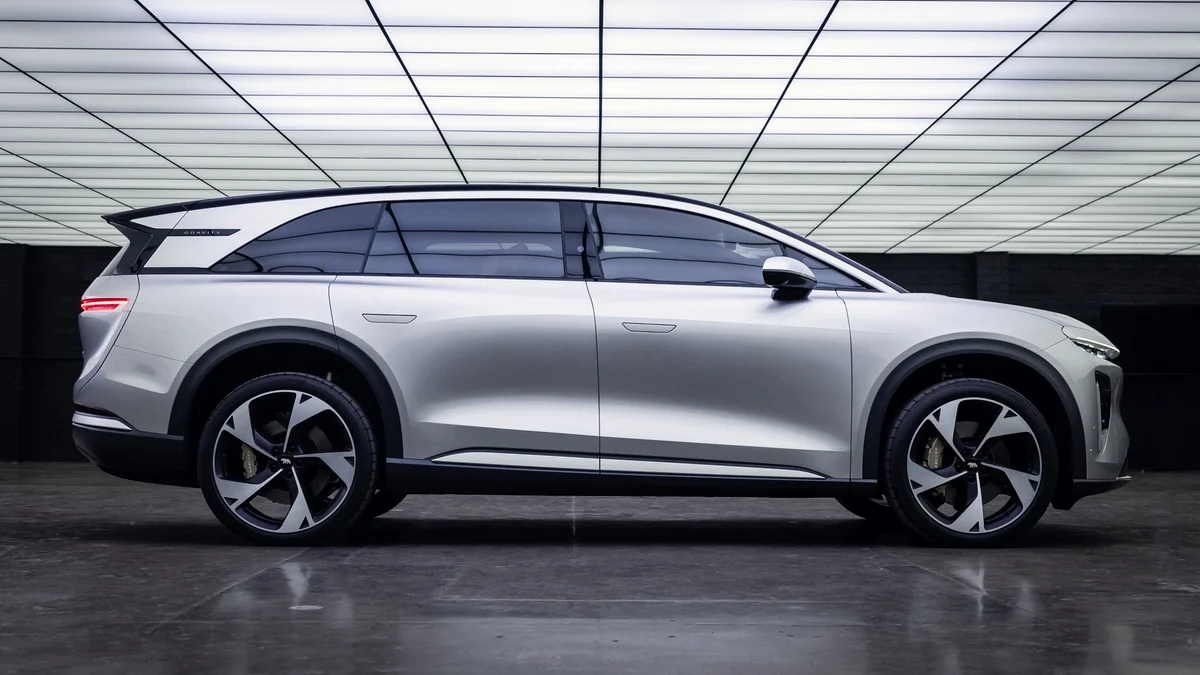
Road trips are where the sticker number lies. InsideEVs runs steady 70 mph highway tests and typically finds results close to the EPA Highway figure, which already sits well below EPA Combined; expect a highway leg to deliver noticeably less than the sticker (InsideEVs 70 mph range tests). Edmunds measured the 2026 Lucid Gravity Grand Touring at 388 miles in its range test against an EPA estimate of 450, and got 400 miles on a best-case run, roughly a 10% to 14% shortfall even in good conditions (Edmunds Lucid Gravity test).
Cold weather compounds this. Recurrent's late-2025 study of more than 30,000 vehicles found that the 34 most-popular EV models retain an average of 78% of their range at 32°F, with vehicles that use heat pumps retaining 83% versus 75% for those relying on resistive heaters (Recurrent winter range study). Stack a 10% to 15% highway penalty on top of a 22% cold penalty and a 300-mile EPA rating can deliver well under 200 real highway miles in February.
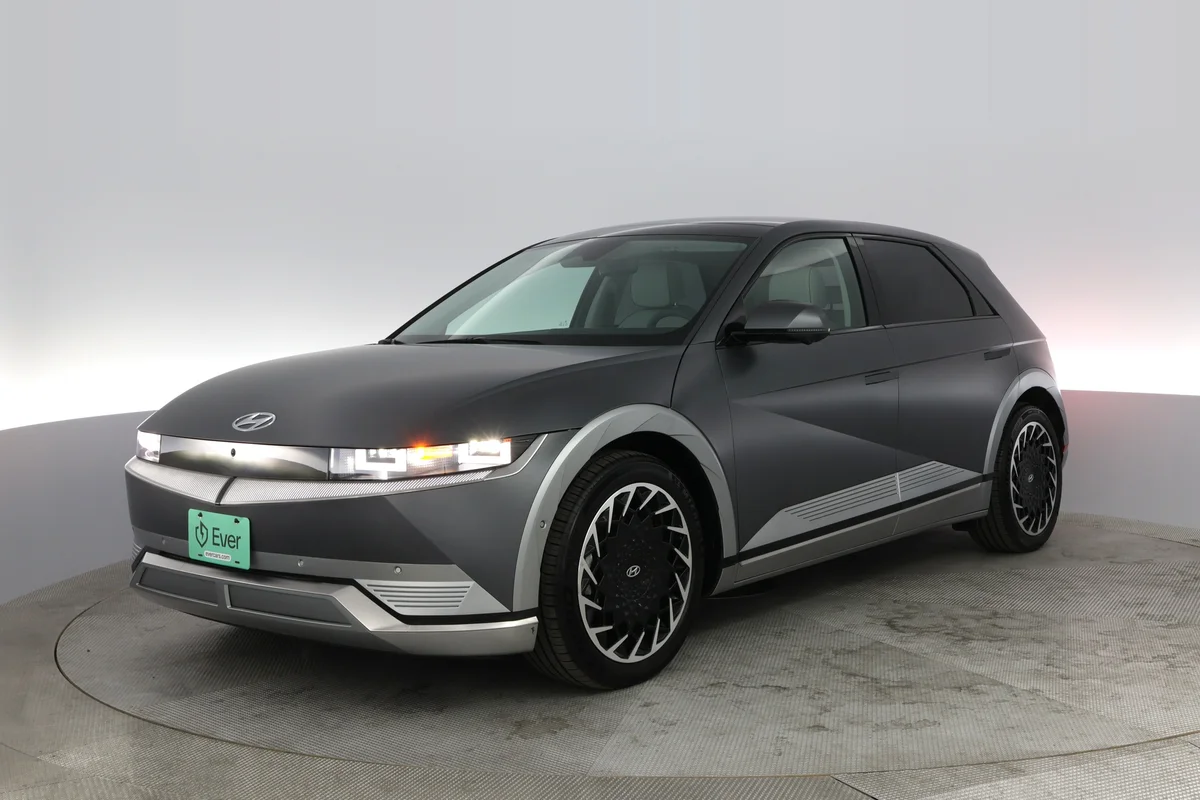
Practical translation: for a road-tripping family that wants no more than one DC fast charge on a 250-mile winter highway leg, you want roughly 350 EPA miles. That puts the Rivian R1S Quad-Motor 2025 at 352 miles and the Lucid Gravity Touring 2025 at 400 miles into the comfortable zone. For a commuter who charges at home nightly and takes the occasional long trip, 280 to 310 EPA miles is plenty, which puts the Hyundai IONIQ 5 Limited AWD 2024 at 303, the Kia EV9 Land AWD 2024 at 280, and the Tesla Model Y Performance 2024 at 303 inside the window.
| EPA range | Typical 70 mph (summer) | Typical 32°F (winter highway) | Fits whom |
|---|---|---|---|
| 250 mi | ~215 mi | ~165 mi | Home-charged commuter, short trips |
| 300 mi | ~260 mi | ~200 mi | Most households, occasional road trips |
| 350 mi | ~300 mi | ~235 mi | Road-trip families, one stop on most legs |
| 400 mi | ~345 mi | ~270 mi | Long rural routes, cold climates, reluctant chargers |
Gate 3: If you tow, plan for roughly half your rated range
Range loss while towing is the gate that most surprises new buyers. A fleet study by Arval found electric cars experience a 23 percentage-point reduction in real-use range while towing, and larger electric light commercial vehicles lose 31 percentage points when fully loaded (Arval, via Trans.info). The Kia EV9's own owner's manual states towing can cut range by up to 50%, and Cars.com's instrumented towing test of a 2024 EV9 measured roughly 2.1 mi/kWh with a 1,920-pound trailer and estimated about 200 miles of real towed range against a 280-mile EPA rating (Cars.com EV9 towing test).
The surprising driver is aerodynamics, not weight. A boxy travel trailer or horse box adds disproportionate drag. A low, teardrop-shaped camper of similar weight costs far less range. Speed matters more than usual too: owners report that dropping from 70 mph to 60 mph while towing recovers a meaningful chunk of range. If you tow regularly, the right questions are not top-line battery size but what you are pulling, how boxy it is, and how often you will be charging mid-trip.
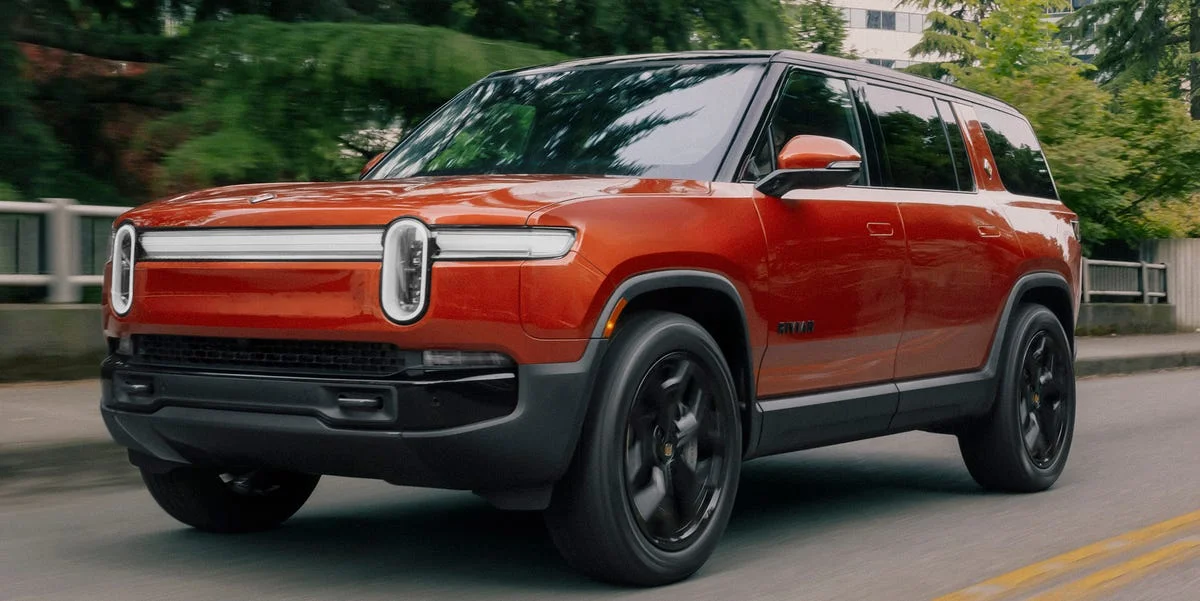
Among the models in our rankings, the serious tow rigs are the Rivian R1S Quad-Motor 2025 and Rivian R1S Dual-Motor 2024, the Ford Bronco EV 2026, the Kia EV9 Land AWD 2024, and the Rivian R2 2026. For comparison shoppers deciding between adventure flagships, the Lucid Gravity, Rivian R2, and Kia EV9 Land comparison is a useful starting point.
Gate 4: What does $65,000 vs $135,000 actually buy?
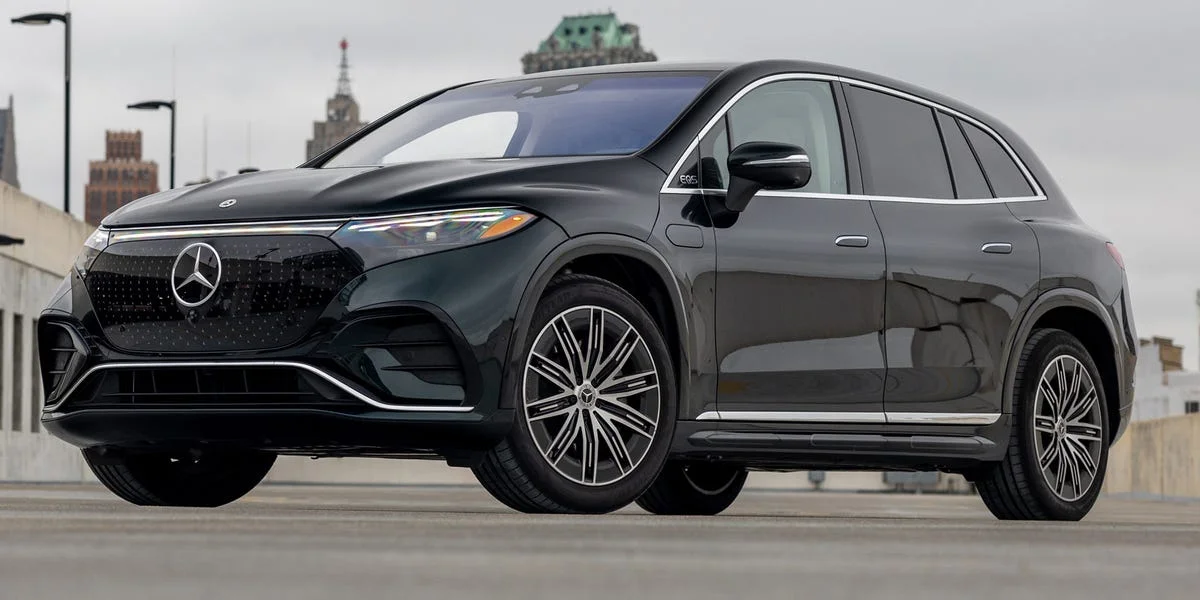
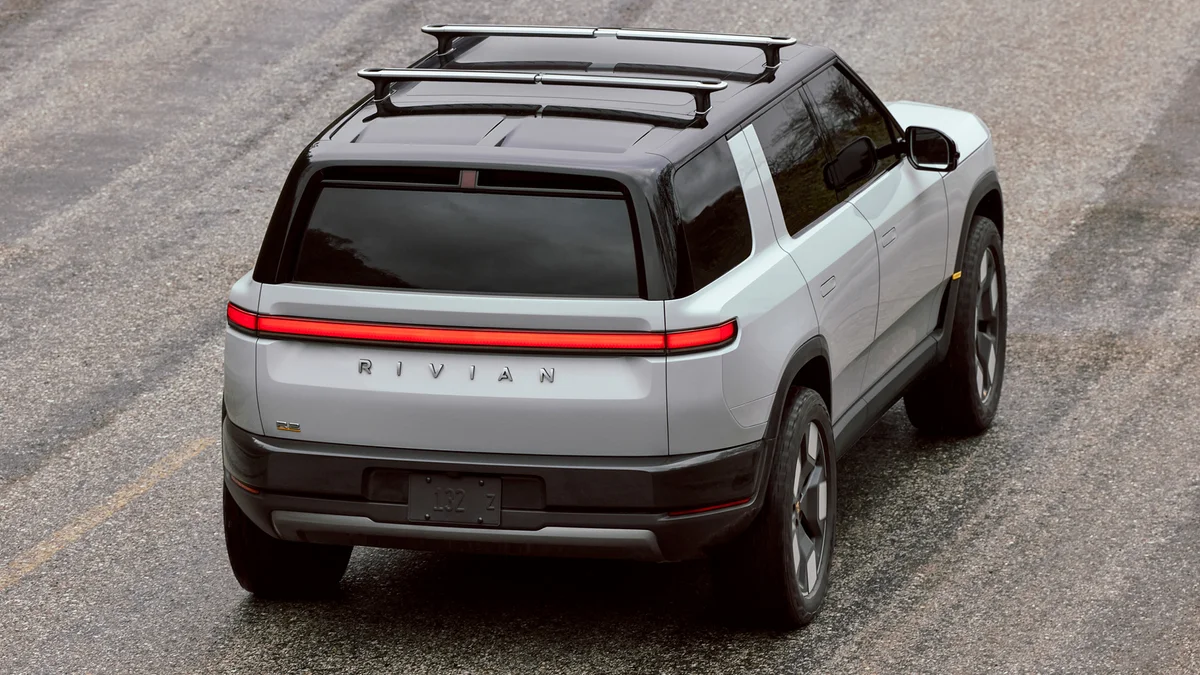
The electric SUV market stretches from the Rivian R2 2026 at $65,000 as configured in our ranking (InsideEVs reports the launch R2 Performance starts at $57,990 with a 330-mile EPA figure, and the single-motor R2 Standard is slated to open at $45,000, InsideEVs) to the Mercedes-Benz EQS SUV 580 4MATIC 2025 at $135,000 and the Mercedes-Benz EQG 580 2025 at $145,000. Doubling the price does not double the range or the practical capability. In several cases the cheaper car is simply better on numbers.
What the premium does buy is interior materials and craftsmanship, screen real estate (Mercedes's MBUX Hyperscreen spans 56 inches across the dashboard), more mature driver-assistance stacks like BMW's Driving Assistant Professional and Mercedes's Drive Pilot, a quieter and more isolating ride, resale prestige, and in specific cases a unique capability: the EQG keeps the G-Class off-road geometry, and the Tesla Model X Plaid 2024 at $104,990 posts 2.5-second zero-to-sixty runs that no $65,000 EV matches.
What the premium does not buy is proportional range. The Rivian R2 at $65,000 is rated for 300 miles as configured in our ranking, higher than the $135,000 EQS SUV 580 at 285 miles. The $98,000 Rivian R1S Quad-Motor 2025 offers 352 miles. Three rows are not a luxury exclusive either: the R1S, Lucid Gravity, Kia EV9, and EQS SUV all seat seven. If you want to see how Mercedes stacks a $135K crossover against a $115K BMW and a $105K Tesla, our EQS SUV 580 vs. Model X Plaid vs. iX M60 comparison does the head-to-head.
| Model | Price | EPA range | 0 to 60 | Seats |
|---|---|---|---|---|
| Rivian R2 2026 | $65,000 | 300 mi | 4.5 s | 5 |
| Lucid Gravity Touring 2025 | $95,000 | 400 mi | 3.5 s | 7 |
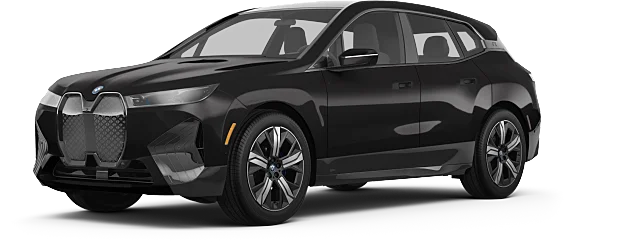
| BMW iX M60 2025 | $111,500 | 288 mi | 3.6 s | 5 |
| Mercedes EQS SUV 580 4MATIC 2025 | $135,000 | 285 mi | 4.5 s | 7 |
| Mercedes EQG 580 2025 | $145,000 | 280 mi | 4.5 s | 5 |
Does the lifetime math close on your timeline?
The savings case for an EV is fuel and maintenance. Kelley Blue Book's 2026 figures put the per-mile fuel gap near $0.08 in the EV's favor, roughly $960 per year at 12,000 miles (Kelley Blue Book). Consumer Reports' lifetime analysis of member survey data puts battery-electric vehicles at roughly $4,600 in maintenance and repair across 200,000 miles versus $9,200 for a comparable gas vehicle, about $0.031 per mile versus $0.061 (Consumer Reports, 2020). At 12,000 miles a year that is about $360 annually in maintenance savings. Call it roughly $1,300 per year in favor of the EV once home charging is in place.
Two things changed in 2025 and 2026 that reshape this. First, the federal $7,500 Clean Vehicle Credit under Section 30D expired on September 30, 2025, and the commercial credit that funded the $7,500 lease discount ended at the same date (Kelley Blue Book, September 2025). For 2026 buyers there is no federal purchase or lease credit. Some manufacturers are discounting leases with their own cash, and several states still run their own incentives, but the automatic $7,500 is gone.
Second, EV depreciation remains worse than gas. iSeeCars' 2026 analysis of roughly 950,000 five-year-old vehicles puts five-year EV depreciation at 57.2% versus 41.8% for all vehicles, a gap of about 15 percentage points (iSeeCars). The gap narrows over shorter holding periods as used-EV pricing catches up, but at the luxury end it is still wide.
So the math depends on your holding period. Keep an electric SUV for seven to ten years, charge at home, and drive 10,000 or more miles per year, and the fuel plus maintenance savings typically cover the depreciation gap. Flip it after three years, especially at the luxury end, and depreciation often erases those savings. A Rivian R2 at $65,000 held for a decade is likely cheaper to own than a comparable gas SUV. A $135,000 EQS SUV traded in after three years probably is not.
What should a first-time EV buyer verify before signing?
Six items catch most of the mistakes that show up in owner forums three months later.
- Have an electrician look at your panel before you buy the car, not after. Older 100-amp panels often need a load-management device or a service upgrade for Level 2 charging.
- Match your charging plug to your car. The Rivian R2 and Lucid Gravity ship with a Tesla-style NACS port; most 2024 models used CCS and need an adapter for Tesla Superchargers.
- Map your two longest routine trips on PlugShare with a 20% to 30% real-range penalty and confirm each leg has at least two working DC fast chargers, not one.
- If you live in a cold climate, favor an SUV with a heat pump. Recurrent data shows an 8-point winter range advantage over cars using resistive heaters, and the compounding over a season is meaningful.
- Read the warranty on the high-voltage battery. Federal law requires eight years or 100,000 miles minimum, and some makers extend it. This is the component that would otherwise make you nervous.
- Plan to drive the finalists back to back. Regenerative braking, one-pedal driving, and driver-assist feel vary enormously between brands and are impossible to judge from a spec sheet.
Should you buy an electric SUV at all?
Yes, if you own your parking spot, drive mostly local miles with a few predictable long trips per year, plan to keep the car at least five years, and are willing to spend one evening learning how to plan a DC fast-charging stop. The fuel savings are real, the maintenance savings are real, and the drive experience of a 500-plus horsepower SUV with instant torque is a meaningful upgrade over a comparable gas vehicle.
No, or at least not yet, if you cannot charge where you sleep and have no workplace or reliable public alternative, if you tow a boxy trailer more than a few times a year on routes without dense DC fast-charging coverage, or if you flip cars every two to three years at the luxury end of the market. In each of those cases the costs stack against you in ways that a spec sheet will not show.
If you are on the fence, a plug-in hybrid SUV covers the daily electric miles without the road-trip or apartment-charging constraints. Our ranking at Top Electric SUVs for Enthusiasts focuses on the performance end if the drive, not the math, is why you are here.
The short version
Pick the gate that is hardest for you first. If charging access is the constraint, solve that before model-shopping. If range is the constraint, buy more EPA than you think you need and assume roughly two thirds of it on a winter highway. If towing is the constraint, assume half. If the lifetime math is the constraint, hold the car for seven years or longer. For most home-charged families, the Rivian R2 2026, Hyundai IONIQ 5 Limited AWD 2024, Kia EV9 Land AWD 2024, and Tesla Model Y Performance 2024 cover the $57,000 to $76,000 zone where the ownership math works best. The $100,000-plus luxury electric SUVs are worth it if you want them, but they are not where the value is.
See Best Electric Suv 2026Questions people ask
Do I need to be able to charge at home to own an EV?+
Practically, yes. J.D. Power's 2026 study found 86% of EV charging happens at home. You can own one without home charging if you have reliable workplace Level 2 or a convenient public DC fast charger on your weekly routine, but you give up most of the fuel-cost advantage and add real friction. Solve the plug problem before you choose the car.
Can I own an electric SUV if I live in an apartment?+
You can, but you need a workable charging plan first: a workplace Level 2 charger, a public DC fast charger within a short detour, or a destination charger at a gym or garage you use regularly. Only about 5% of U.S. rentals offer charging infrastructure today, so most apartment EV owners rely on one of those workarounds.
How much range do I actually need in an electric SUV?+
If you charge at home and drive the national-average 37 miles per day, 250 EPA miles is plenty for everyday use. For regular road trips, aim for 300 to 350 EPA miles so a 70 mph winter leg still delivers 200-plus real miles between stops. Only cold-climate rural drivers and reluctant chargers really need the 400-mile class.
Why does a $65,000 electric SUV sometimes have more range than a $135,000 one?+
Because the premium you pay above roughly $90,000 is usually buying interior materials, driver-assist maturity, isolation, screen size, prestige, or a specific capability like G-Class off-roading. Range is more a function of battery size and efficiency than sticker price, and newer platforms like the Rivian R2 and Lucid Gravity are more efficient than the older Mercedes EQS SUV architecture.
Is an electric SUV worth the extra upfront cost over a gas SUV?+
If you can charge at home and keep the car seven years or more, almost always yes: roughly $960 per year in fuel savings plus about $360 per year in maintenance savings usually add up to more than the depreciation gap. If you flip cars every two or three years, especially at the luxury end, the EV's steeper depreciation often erases the running-cost savings.
Is the $7,500 federal EV tax credit still available in 2026?+
No. The federal Clean Vehicle Credit for purchases and the commercial credit that funded the $7,500 lease discount both ended for vehicles acquired after September 30, 2025. In 2026 there is no automatic federal credit on a new EV. Check state programs and ask dealers about manufacturer lease cash, which has replaced some of the lost incentive.
How much range do I lose while towing with an electric SUV?+
Plan for roughly 40% to 50% of your rated range once you hook up a trailer. Kia's own EV9 manual cites up to a 50% drop, and Cars.com measured about 2.1 mi/kWh and roughly 200 miles of real towed range on a 280-mile-rated EV9. Aerodynamics matters more than weight, so a boxy travel trailer costs much more range than a low teardrop camper at similar weight.
Which electric SUV is the best first EV for most families?+
If you can charge at home and want one car that covers commute, cargo, and occasional road trips, the strongest value picks in our 2026 ranking are the Hyundai IONIQ 5 Limited AWD at $59,000, the Tesla Model Y Performance at $57,990 for Supercharger access, the Kia EV9 Land AWD at $75,900 if you need three rows, and the Rivian R2 at $65,000 if you want some off-road and tow capability.
Sources
What this guide is based on. We research from published specifications, independent reviews and owner reports; we did not test these products ourselves.
- 1.2026 U.S. Electric Vehicle Experience (EVX) Home Charging Study, J.D. Power
- 2.The Multifamily EV Charging Pinch Point, EVs for All America
- 3.How Much Does It Cost to Install a Level 2 EV Charger in 2026?, Qmerit
- 4.How Much Does It Cost to Charge an Electric Car?, Kelley Blue Book
- 5.The $7,500 Federal EV Tax Credit Ends Tomorrow Night, Kelley Blue Book
- 6.EV Driving Range Study by State Finds an Overlooked Stat, Recurrent
- 7.Best EV for Winter & Cold Weather Range: 30,000 Car Study, Recurrent
- 8.InsideEVs 70 MPH Range Test Proves There's Value In EPA Highway Rating, InsideEVs
- 9.Tested: 2026 Lucid Gravity Is Quick but Falls Short on Range, Edmunds
- 10.Towing Reduces Electric Vehicle Range by More Than 30%, Arval Study Finds, Trans.info
- 11.Testing the 2024 Kia EV9's Range While Towing, Cars.com
- 12.The Rivian R2 Launches At $57,990 With 330 Miles Of Range, InsideEVs
- 13.The Cars That Hold Their Value Best and Worst, iSeeCars
- 14.The Low Cost of Maintaining an Electric Vehicle, Consumer Reports
Products mentioned
 BMW iX M60 2025
 Cadillac LYRIQ Sport AWD 2024
 Ford Bronco EV 2026
 Hyundai IONIQ 5 Limited AWD 2024Kia EV9 Land AWD 2024
 Lucid Gravity Touring 2025
 Mercedes-Benz EQG 580 2025
 Mercedes-Benz EQS SUV 580 4MATIC 2025
 Rivian R1S Dual-Motor 2024
 Rivian R1S Quad-Motor 2025
 Rivian R2 2026
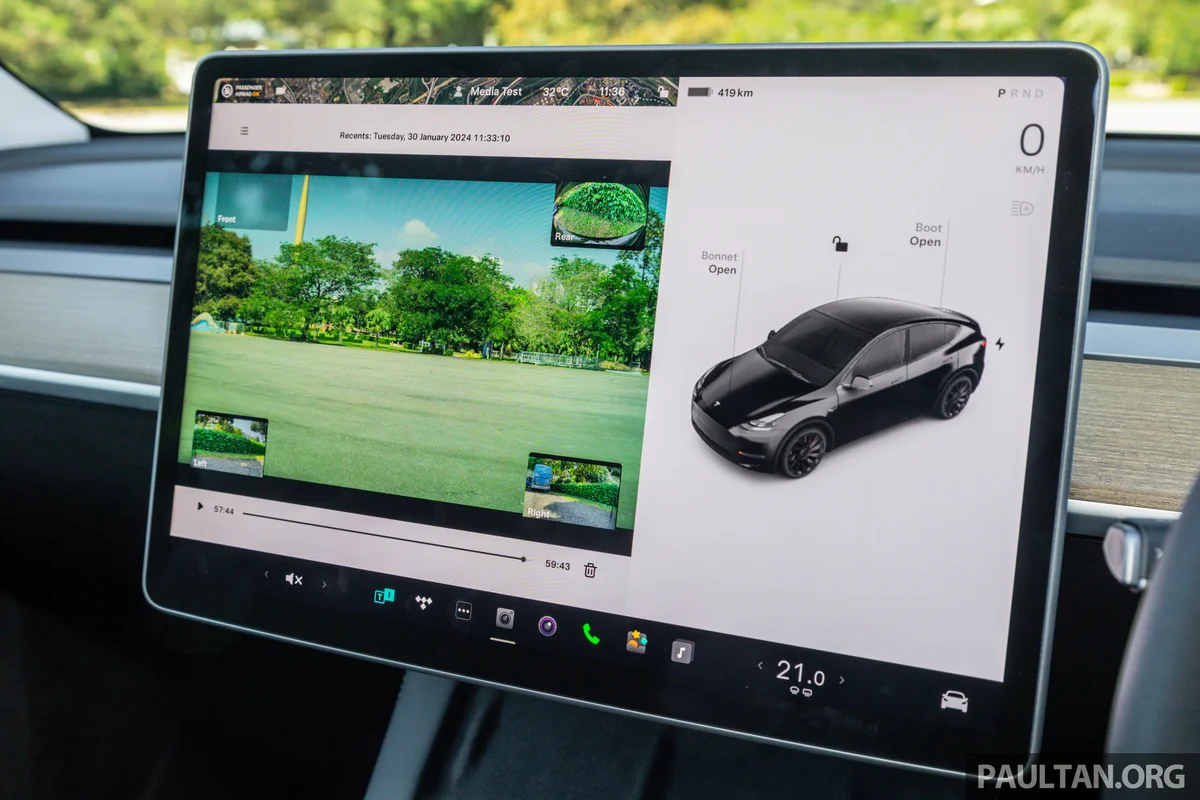 Tesla Model Y Performance 2024
More on electric suvs
Explainer
What 'Autopilot,' 'Full Self-Driving,' and Other Driver-Assist Names Actually Do
A plain-English breakdown of every driver-assist badge on today's electric SUVs: what Tesla Autopilot, FSD, Ford BlueCruise, GM Super Cruise, Rivian Driver+, Hyundai HDA 2, BMW Highway Assistant, Volvo Pilot Assist, Lucid DreamDrive Pro and Mercedes Drive Pilot genuinely do.
Explainer
EV Charging Explained: Level 1, Level 2, and DC Fast Charging, and What You Actually Need at Home
What hardware you need at home, what charging costs in public versus at home, and how to plan an electric SUV road trip without range anxiety.
Explainer
Why Your Electric SUV Gets Less Range Than the Sticker Says
How the EPA range figure is actually produced, why real-world mileage runs 10 to 30 percent lower, and what that means when two electric SUVs look identical on paper.